

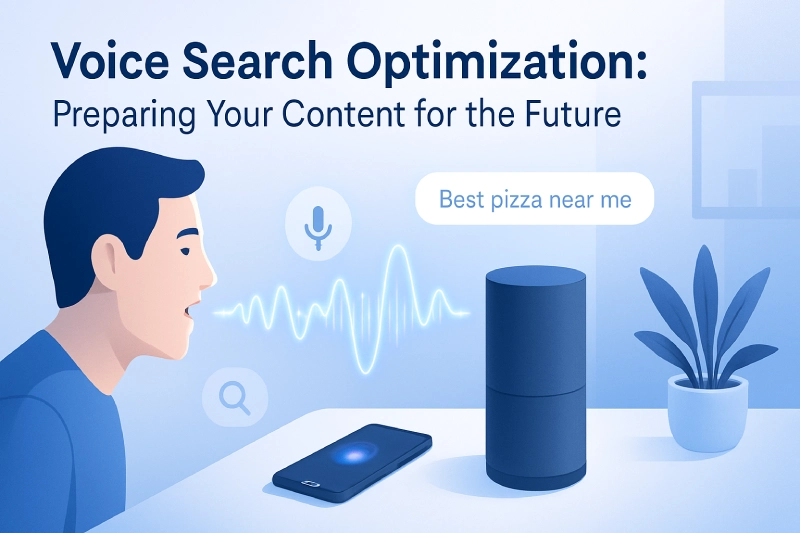
Voice Search Optimization is the process of structuring your content to match how people speak instead of how they type, so your page can be selected as the single spoken answer by voice assistants.
Most websites are still optimized for typing.
That’s the gap.
People don’t speak the way they type. And that difference decides whether your content shows up or gets ignored.
Typed search:
“best SEO tools”
Voice search:
“What are the best SEO tools for beginners?”
That one shift explains everything.
If your content doesn’t match how people actually ask questions, it won’t be picked.
What is Voice Search Optimization?
Voice Search Optimization means aligning your content with spoken queries.
Not keywords.
Intent.
Instead of targeting short phrases, you structure content around how real people ask questions.
If your content clearly answers those questions, you’re optimized.
If not, you’re invisible in voice results.
Why Voice Search Optimization Matters in 2026
Voice search changes one core thing.
You don’t get ten results.
You get one.
When someone asks a question, they hear a single answer. That’s it.
So this is no longer about ranking on page one.
It’s about being selected.
Also:
- Most voice searches happen on mobile
- Most are conversational
- Many have local intent
This is high-intent traffic. People are not browsing. They’re deciding.
How Voice Search Works
Behind every voice search, three steps happen instantly.
1. Speech Recognition
The system converts voice into text.
2. Intent Understanding
Search engines interpret what the user actually means, not just the words.
3. Answer Selection
The system picks one clear answer.
Not the longest page.
Not the most optimized one.
The clearest one.
That’s where most content fails.
Key Strategies for Voice Search Optimization
Conversational Keywords
Voice queries are natural. Most content is not.
People don’t say “SEO tools free.”
They ask full questions.
If your content still uses robotic phrases, it won’t match voice queries.
Write the way people speak. That alone fixes a big part of the problem.
Featured Snippets Optimization
Voice assistants pull answers from featured snippets.
If your content is not structured clearly, it won’t be selected.
The format that works:
- Direct question
- Clear answer in one short paragraph
- Extra details below
No fluff. No long explanations.
Long-Tail Queries
Voice searches are longer and more specific.
Short keywords don’t reflect real intent anymore.
The more specific the query, the easier it is to match intent and rank.
That’s why long-tail queries matter more in voice search than traditional SEO.
Question-Based Content
Most voice searches are questions.
If your content doesn’t answer them directly, it won’t be used.
Structure your content like this:
- Ask the question
- Give a clear answer
- Then explain
Simple structure. High impact.
Voice Search Optimization isn’t complicated.
Most people just overcomplicate it.
Write naturally.
Answer clearly.
Focus on intent.
That’s enough to outperform most content.
Local SEO Optimization
A large portion of voice searches are local.
People ask things like:
- “near me”
- “open now”
- “best in my area”
If your business or content isn’t optimized for local intent, you won’t show up.
Focus on:
- Google Business Profile optimization
- Consistent NAP (Name, Address, Phone)
- Local keywords inside content
Voice search heavily favors location relevance. If you ignore this, you lose a major chunk of traffic.
Mobile-First Experience
Voice search mostly happens on mobile devices.
If your site is slow or hard to use on mobile, it won’t perform.
This is not optional anymore.
Make sure:
- Pages load fast
- Text is readable without zoom
- Buttons are easy to tap
Even if your content is good, poor mobile experience will kill your chances.
Page Speed
Speed directly impacts voice search performance.
Voice assistants prefer fast-loading pages because they need quick answers.
If your site takes too long:
- It may not get selected
- Or it gets replaced by a faster source
Focus on:
- Image optimization
- Lightweight design
- Fast hosting
Speed is not just technical SEO anymore. It affects visibility.
Structured Data
Search engines need help understanding your content.
Structured data makes that easier.
By adding schema:
- Your content becomes clearer
- Your chances of being selected improve
Use:
- FAQ schema
- How-to schema
- Article schema
It doesn’t guarantee results, but it increases clarity and trust.
Voice Search SEO vs Traditional SEO
Traditional SEO focuses on keywords and rankings.
Voice search focuses on intent and answers.
Here’s the difference:
- Traditional SEO targets short keywords
- Voice search targets full questions
- Traditional SEO shows multiple results
- Voice search selects one answer
- Traditional SEO relies on ranking position
- Voice search relies on clarity and relevance
This shift is important.
You’re no longer competing for clicks.
You’re competing to be the answer.
Real Example of Voice Search Optimization
Let’s break this down simply.
User query:
“How do I improve my website speed?”
Step 1: Identify intent
User wants actionable advice, not theory.
Step 2: Structure content
Start with a direct answer:
“To improve website speed, optimize images, reduce unused code, and use fast hosting.”
Step 3: Expand
Add supporting points below:
- Image compression
- Caching
- CDN usage
Step 4: Keep it clean
No long intro. No fluff. Just clear steps.
This is the kind of structure voice search prefers.
Common Mistakes to Avoid
Most websites fail at voice search for simple reasons.
- Writing for keywords instead of people
- Over-explaining instead of answering
- Ignoring mobile performance
- Using complicated language
- Not structuring content clearly
The biggest mistake?
Trying to “optimize” without understanding how people actually speak.
Tools for Voice Search Optimization
You don’t need dozens of tools. Just the right categories.
- Keyword research tools for long-tail queries
- Question research tools to find real queries
- Page speed tools to improve performance
- Schema generators for structured data
- Analytics tools to track behavior
Tools don’t create strategy. They support it.
Future of Voice Search Optimization
Voice search is moving beyond simple queries.
What’s changing:
- AI assistants are getting more contextual
- Search is becoming conversational
- Multimodal search is growing (voice + visuals)
Users won’t just ask one question.
They’ll have conversations.
That means content needs to be:
- More natural
- More structured
- More intent-driven
The websites that adapt early will dominate.
FAQ Voice Search Optimization
What is voice search optimization?
Voice Search Optimization is the process of optimizing content so it can match spoken queries and be selected as the answer by voice assistants.
How do I optimize for voice search?
Use conversational language, answer questions clearly, improve page speed, and ensure your site is mobile-friendly.
Is voice search important for SEO?
Yes. It captures high-intent users and often selects only one result, making it highly competitive and valuable.
What type of content works best for voice search?
Content that directly answers questions in a clear and structured way performs best.
Does voice search affect rankings?
It doesn’t change rankings directly, but it changes how results are selected and presented.
How do I find voice search keywords?
Focus on long-tail, question-based queries and analyze how real users ask questions.