
Image to WebP Converter
Upload JPG or PNG and convert it into WebP instantly. Smaller file size, same dimensions.
Drop your images here
or click to browse from your device
Supports JPG, PNG • Max 5MB each
This Image to WebP Converter helps reduce image file size by converting JPG and PNG files into the modern WebP format without changing visual quality. It is built for faster websites, better SEO performance, and smoother image handling across devices, all while keeping the process simple and fully online. If you are converting a single format frequently, you can also use our dedicated JPG to WebP Converter or PNG to WebP Converter for more focused optimization.
What is the Image to WebP Converter?
The Image to WebP Converter is an online utility that transforms standard image formats like JPG and PNG into WebP images. WebP is a next-generation image format developed to deliver smaller file sizes while preserving clarity and sharpness. This tool focuses on speed, accuracy, and usability, making it suitable for website owners, developers, marketers, and content creators who want optimized images without technical complexity.
Key Features of the Image to WebP Converter
The Image to WebP Converter is designed to handle real-world image optimization needs without unnecessary steps or restrictions. It works directly in the browser and processes images efficiently while maintaining quality.
- Converts JPG and PNG images to WebP format
- Supports multiple image uploads in a single session
- Maintains original image dimensions
- Produces significantly smaller file sizes
- Fast processing without login or signup
- Allows individual or bulk download as ZIP
- Works on desktop, tablet, and mobile devices
How to Use the Image to WebP Converter
Using this Image to WebP Converter is straightforward and does not require any prior technical knowledge. The workflow is built to minimize effort while delivering clean WebP outputs.
- Upload one or multiple JPG or PNG images into the tool
- Click the convert button to start the WebP conversion
- Wait briefly while the images are processed
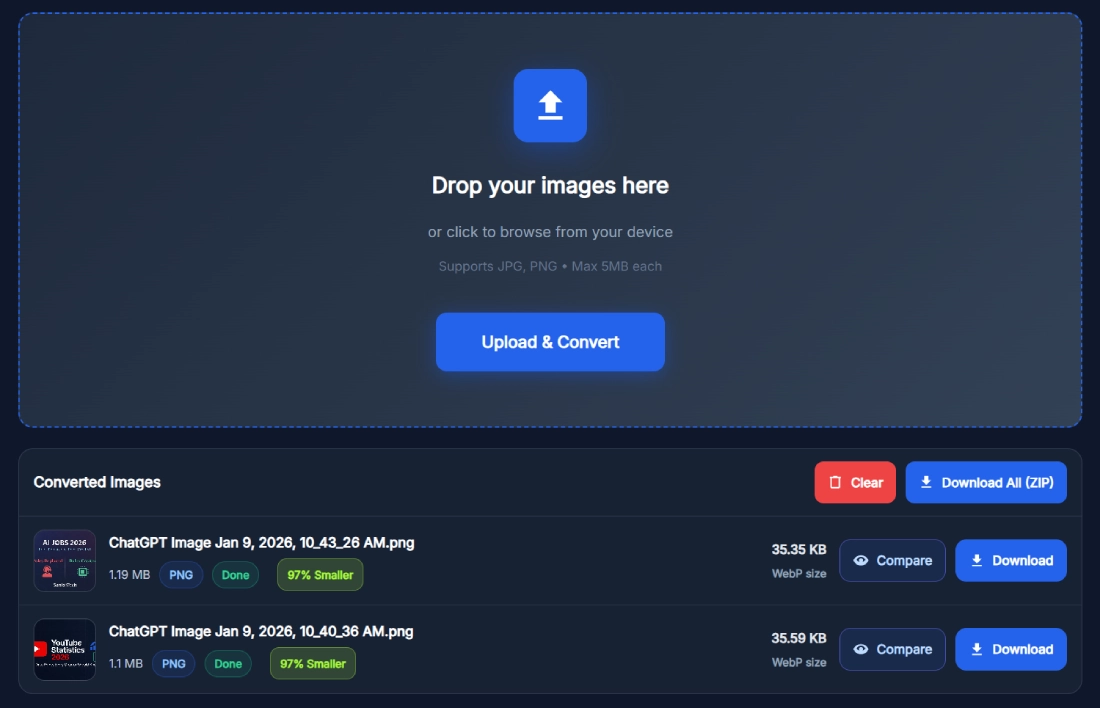
- Review the converted WebP images and file sizes
- Download individual images or use the download all option to get a ZIP file
When You Should Use This Tool
This tool is best used when image performance directly affects page speed, SEO rankings, or user experience. It is especially helpful during website launches, redesigns, or ongoing optimization work. Content creators uploading images frequently, developers managing asset libraries, and marketers improving Core Web Vitals can all benefit from converting images to WebP online instead of relying on heavier formats that slow pages down.
Benefits of Using This Tool
The Image to WebP Converter delivers practical advantages that go beyond simple format change. It supports performance goals while keeping image quality intact.
- Improves website loading speed
- Helps meet Core Web Vitals requirements
- Reduces bandwidth usage
- Enhances mobile browsing experience
- Keeps images visually sharp
- Simplifies bulk image optimization
- Supports SEO friendly image delivery
Real Example of How the Tool Works
A website owner uploads ten PNG images used across landing pages and blog posts. Each image is over one megabyte in size. After running them through the Image to WebP Converter, the resulting WebP files are reduced to under forty kilobytes each while keeping the same resolution. These optimized images replace the originals on the site, resulting in faster load times and improved performance scores without any visible quality loss.
Helpful Tips for Better Results
Using the Image to WebP Converter effectively can further improve outcomes when combined with smart image practices.
- Upload original high quality images for best compression balance
- Avoid repeated conversions of already optimized WebP files
- Use bulk upload for large image libraries
- Test WebP images across browsers before deployment
- Pair WebP images with proper lazy loading
- Replace images site-wide for consistent performance gains
Frequently Asked Questions
What does the Image to WebP Converter do?
The Image to WebP Converter converts standard image formats like JPG and PNG into WebP files. WebP images are smaller in size while keeping the same visual quality. This conversion helps websites load faster and reduces bandwidth usage. The tool handles the process online, allowing users to upload images, convert them instantly, and download optimized WebP files without installing any software or creating an account.
Is this Image to WebP Converter free to use?
Yes, the Image to WebP Converter is completely free to use. There are no hidden charges, subscriptions, or usage limits enforced during normal use. Users can convert single images or multiple images in one session without logging in. This makes it suitable for individuals, businesses, and agencies that need frequent image optimization without additional cost or licensing concerns.
Can I convert multiple images at once using this tool?
The Image to WebP Converter supports multi-image uploads, allowing users to convert several JPG or PNG files in a single session. This bulk conversion feature saves time when optimizing large image collections. Once converted, users can download each image individually or use the download all option to receive a ZIP file containing all converted WebP images.
Does the tool change image dimensions during conversion?
No, this webp image conversion tool maintains the original dimensions of uploaded images. Only the file format and compression method change. This ensures that layout consistency is preserved across websites and applications. The converted WebP images retain the same width and height as the original JPG or PNG files, making them safe replacements without design adjustments.
Will image quality be affected after conversion?
The Image to WebP Converter is designed to reduce file size while preserving visual clarity. In most cases, users will not notice any visible quality loss after conversion. WebP uses advanced compression techniques that balance size and quality effectively. This makes the tool ideal for websites where both performance and image appearance are important.
Are my uploaded images stored on the server?
Uploaded images are processed temporarily to perform the conversion. They are not stored permanently or reused for any other purpose. Once the conversion is completed and files are downloaded, the images are cleared from the system. This approach helps protect user privacy and ensures secure handling of uploaded files.
Can I use the Image to WebP Converter on mobile devices?
Yes, the Image to WebP Converter works on mobile phones and tablets through modern web browsers. The interface adapts to different screen sizes, allowing users to upload, convert, and download WebP images directly from their mobile devices. This makes it convenient for quick image optimization without needing a desktop computer.
Is this tool suitable for developers and SEO professionals?
This Image to WebP Converter is suitable for developers, SEO specialists, and site owners who need performance-optimized images. It helps reduce page load time and improves Core Web Vitals metrics. By converting images to WebP online, professionals can streamline optimization workflows without relying on plugins, scripts, or server-side configurations.
What is WebP image format?
WebP is a modern image format developed to provide smaller file sizes compared to traditional formats like JPG and PNG. It supports both lossy and lossless compression and is widely supported by modern browsers. WebP images help improve website speed and reduce data usage while maintaining good visual quality across different devices.
Why should I convert images to WebP online?
Converting images to WebP online saves time and eliminates the need for desktop software. Online tools allow quick access from any device and make bulk optimization easier. Using a web-based solution also ensures compatibility and reduces setup effort, especially for users who need fast image optimization without technical steps.
Does WebP help improve SEO?
Yes, WebP images can indirectly improve SEO by enhancing page speed and user experience. Faster loading pages tend to perform better in search rankings. Smaller image sizes also reduce bounce rates and improve engagement metrics. Using a reliable webp image conversion tool supports technical SEO efforts focused on performance.
Are WebP images supported by all browsers?
Most modern browsers support WebP images, including Chrome, Edge, Firefox, and Safari. Older browsers may require fallback formats. However, WebP adoption is now widespread, making it safe for most websites. Developers can also use responsive image techniques to serve alternative formats when necessary.
Is WebP better than JPG and PNG?
WebP is generally more efficient than JPG and PNG in terms of file size. It delivers similar or better quality at smaller sizes. PNG is still useful for certain transparency needs, but WebP often replaces both formats for web use. Choosing WebP helps balance quality and performance more effectively.
Can WebP images be used in WordPress websites?
Yes, WordPress supports WebP images in modern versions. Users can upload WebP files directly or convert existing images using tools like this Image to WebP Converter. Using WebP in WordPress helps improve site speed, especially on image-heavy pages like blogs, landing pages, and product listings.
Do WebP images affect website loading speed?
WebP images significantly reduce image file sizes, which improves loading speed. Faster image delivery reduces overall page weight and helps pages render quicker on both desktop and mobile devices. This improvement plays a key role in better user experience and performance metrics measured by search engines and analytics tools.